Laser Marking Masterbatch for Plastics
LaZact is a high-performance laser marking masterbatch designed to help manufacturers create permanent, high-contrast marks on plastic components without additional inks, labels, or secondary printing processes. Our technology is engineered for a wide range of laser markable plastic materials, polymer materials, thermoplastic materials, and engineering plastics, making it easier to achieve crisp identification marks, serial numbers, QR codes, logos, and traceability information.
Unlike traditional marking methods, LaZact laser marking additives are incorporated directly into the plastic during processing. They can be used with compatible polymer resins, synthetic resins, plastic compounds, resin compounds, and polymer compounds to improve how the material reacts to laser energy. This helps manufacturers achieve clear, durable, and repeatable marking results throughout the product’s lifecycle.
Whether you are manufacturing automotive components, consumer products, medical devices, electrical connectors, packaging, or industrial parts, LaZact provides a proven solution for plastic laser marking that improves readability, durability, and production efficiency.
LaZact can be incorporated into a variety of laser marking masterbatch systems using compatible base resin, carrier resin, engineered resin, specialty resin, and commodity resin options. Whether your project uses injection molding resin, moldable plastics, or a custom polymer formulation, our team can help determine the most appropriate masterbatch formulation for your application and manufacturing process.


Benefits of Laser Marking Additives
Laser marking additives provide manufacturers with an efficient and reliable way to create permanent, high-contrast markings directly on plastic components. Unlike labels, inks, or secondary printing processes, a laser marking additive becomes part of the material itself, producing durable marks that resist wear, chemicals, moisture, and UV exposure. This makes plastic laser marking ideal for serial numbers, QR codes, barcodes, logos, and product traceability across a wide range of industries.
When incorporated into laser marking masterbatch or compounded directly into laser markable plastics, these additives improve marking quality while helping streamline production by eliminating additional labeling or printing steps. The result is a cleaner manufacturing process, lower maintenance requirements, and consistent, high-quality marks that remain readable throughout the life of the product.
Key Benefits
- Permanent, high-contrast laser markings
- Eliminates labels, inks, and secondary printing operations
- Excellent resistance to abrasion, chemicals, and UV exposure
- Supports QR codes, barcodes, serial numbers, logos, and traceability
- Compatible with many engineering and commodity plastics
- Improves production efficiency and reduces processing steps
- Suitable for automotive, medical, electronics, packaging, and industrial applications
Innovating Plastics, Elevating Industries
Brilliance LaZact Additive caters to the needs of plastic industries and manufacturers involved in processes like blown film, blow molding, injection molding, plastic compound modification, granulation, and wire drawing. Our products are extensively utilized across diverse sectors, including automotive, electronics, home furnishing, appliances, wire and cable, 3D printing, packaging, toys, medical care, sports, livestock ear tagging, security seals, credit cards, and more.


Laser Marking Additives Customized for Your Project
No two manufacturing processes are the same. That's why Brilliance Laser Inks provides customized laser marking additive solutions tailored to your material, application, and performance requirements. Whether you're developing a new product or improving an existing one, our technical team is ready to help you achieve reliable, high-contrast laser marking results. Contact us today to discuss your project and discover the right solution for your application.
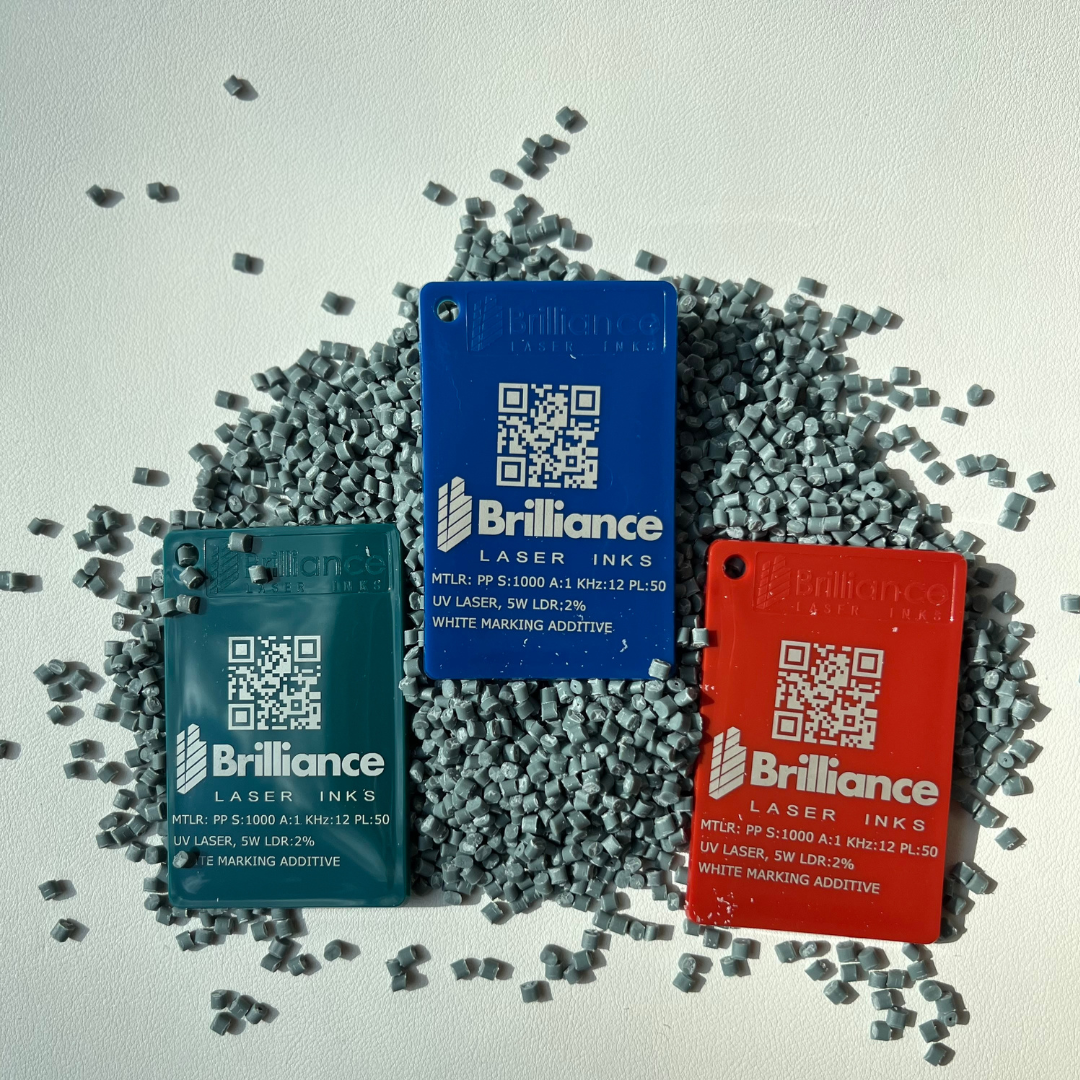
1. Material Compatibility
Brilliance Laser Inks LaZact Additives are high-performance plastic laser marking additives designed for a wide range of plastic materials and polymer materials, including PP, PE, PC, PVC, ABS, TPU, PBT, TPR, TPE, HIPS, PA6/PA66, POM, and ABS+PC.
LaZact is suitable for many thermoplastic materials, engineering plastics, commodity plastics, polymer resins, synthetic resins, and moldable plastics used in molding, compounding, extrusion, packaging, automotive, electronics, industrial, medical, and consumer product applications.
Because every plastic formulation and polymer formulation can behave differently under laser energy, our team helps evaluate resin type, material grade, compound grade, pigments, fillers, and processing conditions to determine the best additive approach for your application.
LaZact helps create sharp, permanent, high-contrast laser marks for logos, barcodes, QR codes, serial numbers, traceability, branding, and security markings, making it a reliable solution for laser marking plastics across a wide range of manufacturing environments.
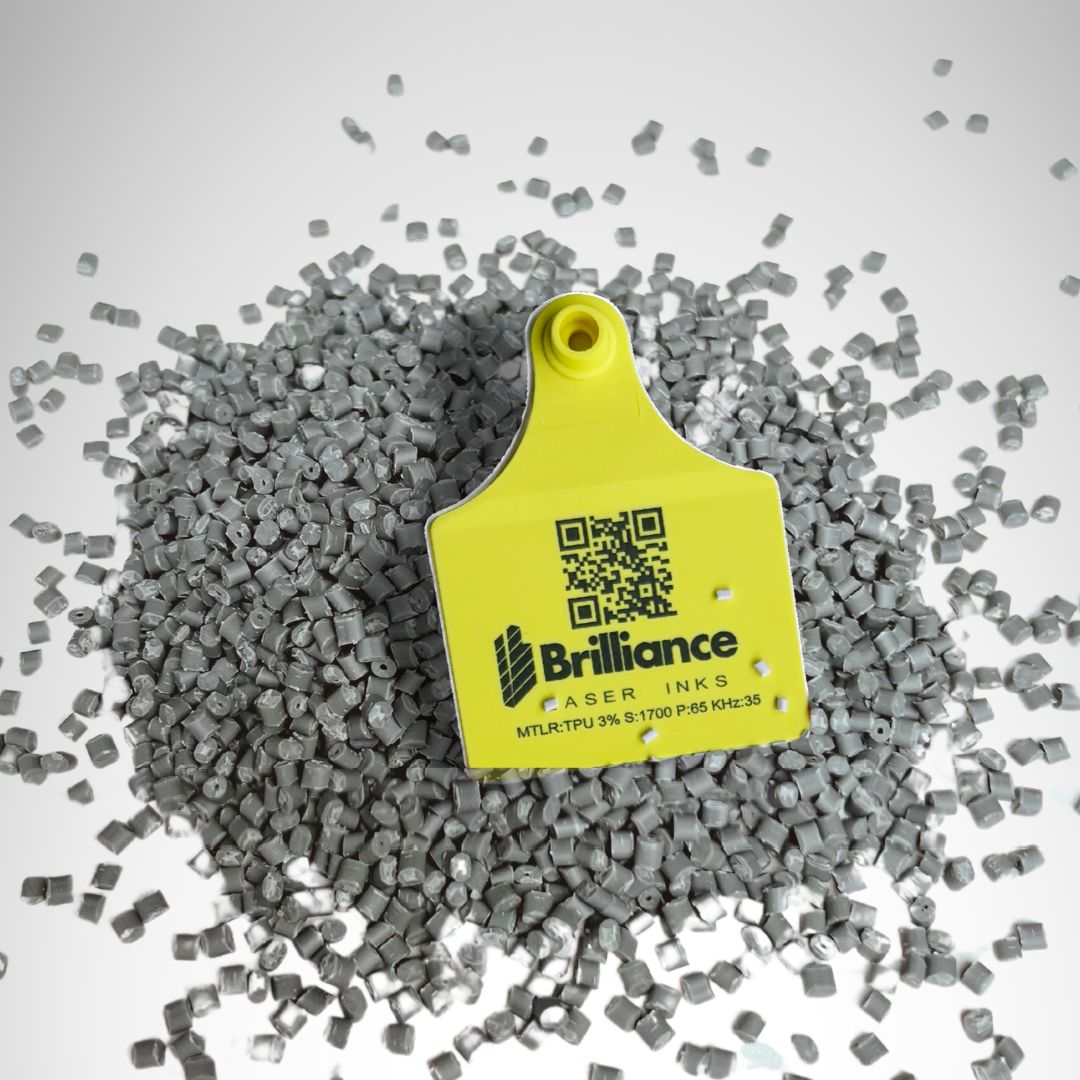
2. Marking Quality
Brilliance LaZact Additives are designed to create sharp, high-contrast, and durable laser marks on plastic surfaces. They help improve mark permanence, readability, and visual quality, making them ideal for logos, barcodes, QR codes, serial numbers, traceability codes, and product identification.

3. Compatible with Resins, Pellets, and Plastic Raw Materials
LaZact laser marking additives can be evaluated for use with a variety of plastic raw materials, plastic feedstock, resin pellets, polymer pellets, plastic pellets, thermoplastic pellets, plastic granules, and resin granules used in common manufacturing and compounding processes.
For manufacturers working with plastic compounds, resin compounds, polymer compounds, or masterbatch-compatible resin systems, LaZact can be tested to support permanent, high-contrast laser marking while maintaining the processing needs of the finished material.
Our additive solutions are designed to work within the material development process, from base resin and carrier resin selection to engineered resin, specialty resin, or commodity resin applications. Whether your project involves injection molding resin, extrusion, granulation, or custom compound development, we can help you evaluate compatibility and marking performance before full-scale production.
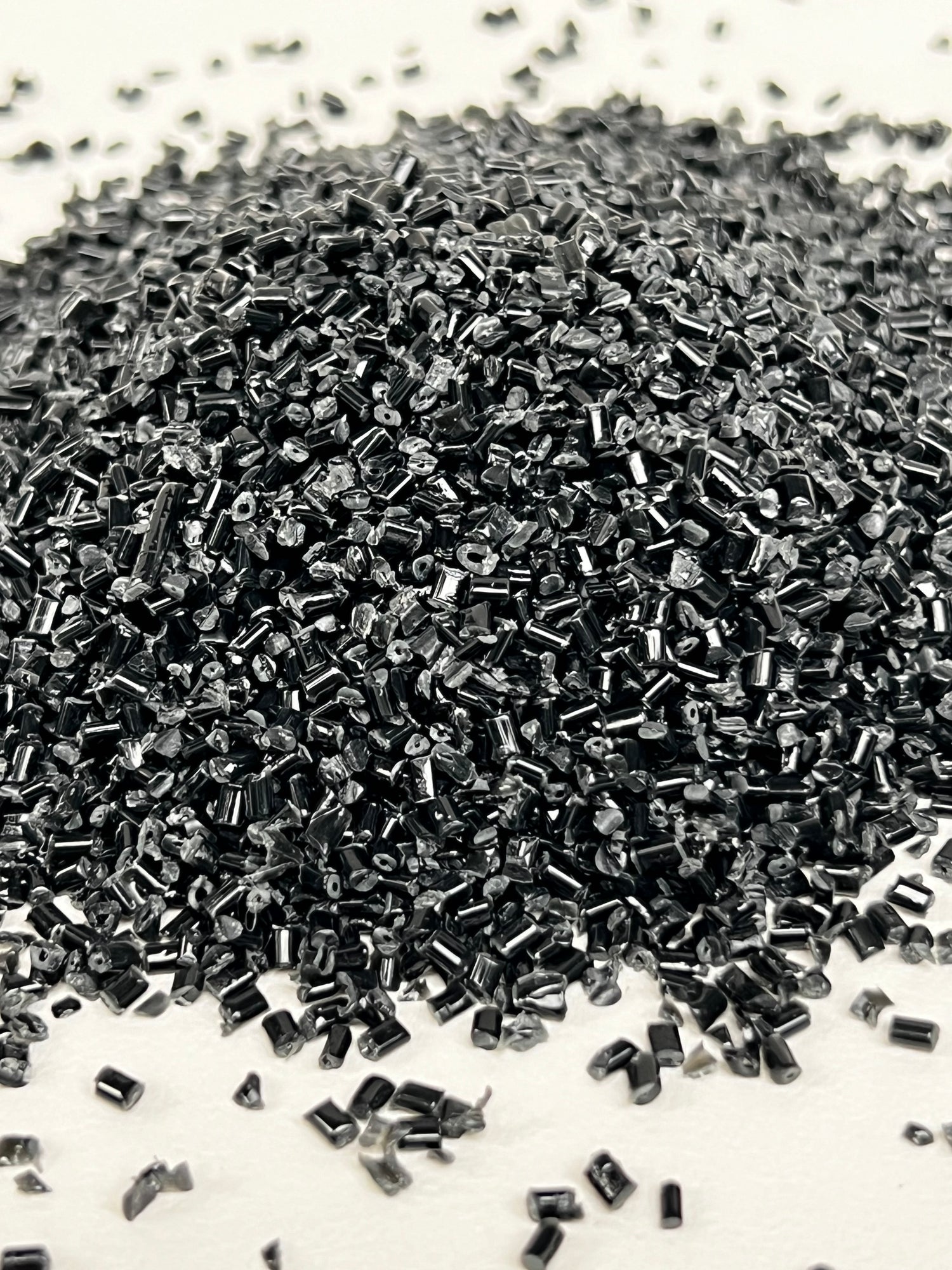
4. Process Conditions
Brilliance LaZact Additives are designed for reliable plastic laser marking under different process conditions, including temperature, humidity, laser power, laser speed, polymer type, and molding settings. Choosing the right additive helps improve mark contrast, durability, readability, and overall marking quality for your application.

Recommended Laser Marking Additive Loading Levels

Proper Material Preparation

Achieving High-Contrast Laser Marking on Black Plastics

Optimizing Laser Parameters for Maximum Performance

Compatibility Across Different Plastic Materials

Selecting the Right Laser Marking System
Frequently Asked Questions
Find answers to common questions about LaZact Plastic laser marking addivites.
Our additives are designed to be universal and work effectively with most general commodity polyolefin polymers.
Lazact Additives are versatile and compatible with a wide range of plastics, including PP, PE, PC, POM, ABS, TPU, PBT, TPR, TPE, HIPS, PA6/PA66, and ABS+PC, making it highly versatile and suitable for diverse applications. In general, Lazact laser marking additives are most commonly used when it is important to create a high-contrast mark on a plastic surface.
We recommend 1% - 4% LDR(let down ratio). We recommend to test it to know what LDR works for your requirement.
We understand that settings may vary depending on your laser machine type and specifications and application, we still suggest to contact our technical support team for more personalize recommendation.
Permanent marking can be accomplished using Fiber and Yag lasers, while using a diode laser for printing is something we are exploring further.
Fiber and YAG lasers are compatible with Lazact Additives. These lasers provide precise and clear markings, ensuring detailed and vivid results on various plastics. The synergy between Lazact Additives and these laser types optimizes marking quality, enhancing both visibility and durability.
Our Lazact additive is an ideal solution for marking on ABS plastic during the molding process. Permanent marking can be accomplished using Fiber and Yag lasers while using a diode laser for printing is something we are exploring further. For optimal contrast, we suggest introducing 1% to 4% LDR of our granulated masterbatch or powder concentrate in your molding process.